1. Introduction
Precision is key in modern machinery and automation. Have you ever wondered how systems maintain flawless movement under heavy loads? The answer often lies in linear guides with flange blocks.
In this article, we will explore what a Linear Guide With Flange Block is and its role in ensuring smooth, precise motion. You’ll learn how these systems contribute to industries like robotics, CNC machining, and 3D printing.
2. What is a Linear Guide with Flange Block?
Definition and Core Function
A linear guide with flange block is an essential component for precise, low-friction motion in industrial and automation systems. This system ensures smooth, accurate movement along a fixed path, vital for applications that demand high levels of precision. The flange block, a key element of the linear guide, serves as the mounting point for the bearing system, enabling easy installation and providing stability during operation.
Linear guides facilitate smooth translation of equipment or components in machines, moving either horizontally or vertically. The flange block design secures the guide to the machinery or frame, contributing to alignment and precision. It ensures the consistent motion of the carriage or slider along the rail, enabling minimal friction and high repeatability in every movement.
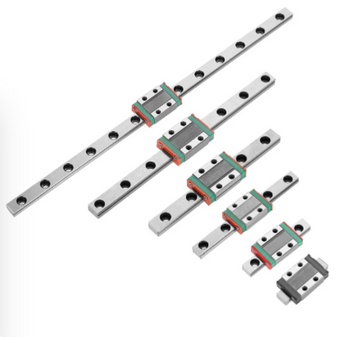
Components of a Linear Guide with Flange Block
A typical linear guide system includes several interconnected components:
Component | Description |
Rail | The track along which the carriage or slider moves, precision-machined for minimal resistance and high accuracy. |
Carriage/Slider | The moving part that travels along the rail, holding the load and guided by rolling elements like balls or rollers. |
Flange Block | A robust mounting unit that holds the carriage in place while ensuring alignment with the rail. |
Rolling Elements | Typically ball bearings or rollers that reduce friction between the moving parts, ensuring smooth motion. |
Design Features
Linear guides with flange blocks are designed for optimal performance in a compact form. Some key design features include:
● High Rigidity: The flange block and rail structure ensure the system can withstand significant radial and axial forces without deforming.
● Load-Bearing Capacity: The design ensures that the system can handle heavy loads, providing reliable performance in high-demand environments.
● Compact Structure: Despite their high load capacity and rigidity, the system is designed to be space-efficient, making it suitable for machines with limited installation space.
3. Key Benefits of Linear Guides with Flange Blocks
Precision and Accuracy
The core benefit of a linear guide with flange block lies in its ability to provide extremely precise motion control. These systems are capable of achieving submicron accuracy, making them indispensable in high-precision engineering tasks. For instance, CNC machines, which require high positioning accuracy, rely on linear guides to ensure the cutting tool’s path is consistently precise. The low-friction motion achieved by these systems reduces vibration and movement errors, resulting in superior repeatability.
In industries like aerospace, automotive, and medical devices, where the smallest misalignment can lead to defects, this precision is critical. Linear guides with flange blocks enable exact positioning, ensuring that each part is accurately machined or assembled.
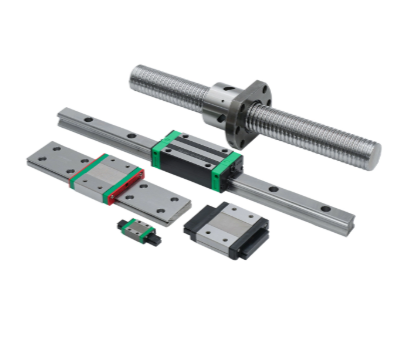
Reduced Friction and Wear
Another significant advantage of linear guides with flange blocks is their low-friction design. The rolling elements, typically steel balls or rollers, significantly reduce the resistance between moving parts. This results in:
● Energy Efficiency: The reduced friction lowers the energy required to operate the system, contributing to lower operating costs.
● Minimal Heat Generation: Less friction means less heat, which helps extend the lifespan of the system and reduces the need for frequent maintenance.
In addition, the reduced friction leads to lower wear on both the linear guide system and surrounding components. This minimizes the risk of mechanical failure due to overuse or degradation, ensuring long-term reliability.
Durability and Longevity
Linear guides with flange blocks are built to last. They are made from durable materials such as stainless steel or alloy steel, which provide strength and resistance to corrosion. In addition to material strength, these guides often feature protective coatings and seals that further enhance their resistance to environmental damage, including moisture, dust, and chemicals.
As a result, these systems are suitable for use in harsh environments, including factories, cleanrooms, and outdoor applications. The protective features also help reduce maintenance needs and operational downtime, making them ideal for applications that require continuous operation.
4. Applications in Precision Engineering
CNC Machines
In CNC machines, where precise cutting, drilling, or milling operations are performed, linear guides with flange blocks play a crucial role in ensuring the movement of cutting tools and workpieces remains highly accurate. The smooth, low-friction motion provided by these guides ensures that the components are perfectly aligned during the entire machining process, which is essential for producing high-quality, defect-free parts.
For industries like aerospace and medical device manufacturing, where even the smallest deviation can result in costly errors, the precision provided by these guides is indispensable. The ability to ensure repeatability and consistency in each movement of the CNC machinery enhances the overall productivity and quality of the manufacturing process.
Robotics
Linear guides with flange blocks are also widely used in robotic systems, where exact, repeatable movements are required. These guides are crucial for robotic arms that perform intricate tasks such as pick-and-place operations, welding, or assembly. The flange block design ensures that the robotic arms maintain stability and precise movement along their designated paths, even under heavy loads.
In automation systems, particularly those involving high-speed operations, the reliability and accuracy of linear guides help improve the efficiency and precision of these tasks, ultimately leading to faster production cycles and fewer errors.
3D Printing
In 3D printing, linear guides with flange blocks ensure the accurate movement of the print bed and extruder head. These systems allow the components to move smoothly along their axes, which is essential for producing high-resolution printed parts. The precision of the movement directly affects the quality of the printed object, making linear guides crucial for additive manufacturing processes.
Whether in FDM (Fused Deposition Modeling) or SLA (Stereolithography) 3D printers, maintaining consistent and accurate motion helps achieve better-quality prototypes and final products. These guides ensure that the printing process remains precise, even during rapid movement, preventing errors in the printed layers.
Automation Systems
In industrial automation and material handling systems, linear guides with flange blocks play a vital role in ensuring smooth, accurate motion. They are used in conveyor belts, robotic arms, and material handling systems, which need to move parts or materials accurately and reliably. The low-friction motion reduces the wear on these automated systems, which allows for smoother operation and improved longevity.
These guides are particularly valuable in environments requiring high-speed, high-precision operations, such as in assembly lines, packaging systems, and logistics. The ability to maintain stable movement helps reduce production errors and enhances overall system efficiency.
5. Why Choose Linear Guides with Flange Blocks for High-Precision Applications?
Comparison with Other Linear Guide Systems
When compared to other types of linear guides, such as linear shafts or round shaft systems, linear guides with flange blocks offer several advantages:
● Load-Bearing Capacity: Flange blocks can handle higher loads compared to other systems, making them ideal for applications with heavy-duty requirements.
● Accuracy: The precision engineering involved in the design of flange blocks ensures that the motion is smoother and more accurate, which is critical for tasks like CNC machining and robotics.
● Ease of Installation: The flange block design allows for easier mounting and alignment compared to traditional linear shaft systems.
In industries where high-load handling and precise movement are paramount, linear guides with flange blocks provide the optimal solution.
Load Distribution and Rigidity
The flange block and track design are engineered to distribute loads evenly, which enhances system stability. By reducing deflection, these systems ensure that the components move smoothly, without unwanted vibration or displacement. This stability is crucial in high-precision tasks, such as CNC machining and robotic operations, where any deviation could compromise the final product.
The system's rigidity also ensures that the linear guide can handle varying loads without affecting its performance, making it suitable for both static and dynamic applications.
Resistance to Environmental Factors
Linear guides with flange blocks are designed to withstand harsh environments, thanks to their protective coatings, seals, and corrosion-resistant materials. These features prevent dust, moisture, and chemicals from damaging the system, ensuring reliable performance even in challenging operating conditions. This makes them ideal for use in industries like automotive, food processing, and semiconductor manufacturing, where exposure to such factors is common.
6. Maintenance and Durability Considerations
Low Maintenance Requirements
One of the key advantages of linear guides with flange blocks is their low maintenance requirements. The smooth, low-friction motion minimizes wear on the system, which means that the system requires fewer maintenance interventions over its lifespan. This leads to reduced downtime and ensures that the machinery operates efficiently without frequent disruptions for repairs.
Durability Features
These linear guides are built for durability. The high-strength materials, coupled with protective coatings and seals, extend the system's lifespan. The ability to perform consistently over time, even under heavy loads, makes them a cost-effective solution for industries requiring continuous operation.
Cost Efficiency
While linear guides with flange blocks may have a higher upfront cost compared to other types of systems, their reduced maintenance needs and extended service life make them a cost-effective choice in the long run. By minimizing the frequency of replacements and repairs, these systems offer significant savings over time, making them a smart investment for industries that rely on precision machinery.
7. Conclusion
Linear guides with flange blocks play a crucial role in precision engineering. Their ability to provide smooth, low-friction movement ensures high accuracy and durability. These systems are essential for industries requiring efficient and reliable motion control, like robotics and CNC machining. Shandong Yunfan Precision Bearing Co., Ltd. offers high-quality linear guides, helping manufacturers enhance production efficiency and precision. Investing in these systems can significantly improve performance and reduce maintenance costs in the long run.
FAQ
Q: What is a Linear Guide With Flange Block?
A: A Linear Guide With Flange Block is a precision component that ensures smooth and accurate movement in industrial and automation systems. The flange block securely holds the carriage in place, providing stability while the rail guides the movement.
Q: How does a Linear Guide With Flange Block work?
A: The system works by reducing friction between the moving parts. The rail guides the carriage or slider, while the flange block ensures alignment, enabling smooth, precise motion in CNC machines, robotics, and automation systems.
Q: Why should manufacturers use a Linear Guide With Flange Block in their systems?
A: Linear Guides With Flange Blocks offer high precision, durability, and efficiency. They reduce friction and wear, which increases the lifespan of machinery and minimizes maintenance needs, making them ideal for high-precision tasks.
Q: What industries benefit from using Linear Guides With Flange Blocks?
A: Industries like aerospace, robotics, automotive, and 3D printing benefit from Linear Guides With Flange Blocks, as they ensure precision, high load-bearing capacity, and reliable performance in demanding applications.
Q: Are Linear Guides With Flange Blocks cost-effective?
A: Yes, while the initial cost may be higher, Linear Guides With Flange Blocks reduce maintenance and downtime. Their durability and long lifespan provide cost savings over time, making them a valuable investment for high-precision tasks.

 English
 العربية
 Français
 Русский
 Español
 Português
 Deutsch
 italiano
 日本語
日本語 한국어
한국어 Nederlands
 Tiếng Việt
 ไทย
ไทย Polski
 Türkçe
 ພາສາລາວ
 ភាសាខ្មែរ
 Bahasa Melayu
 ဗမာစာ
ဗမာစာ தமிழ்
தமிழ் Filipino
 Bahasa Indonesia
 magyar
 Română
 Čeština
 Монгол
 қазақ
қазақ Српски
 हिन्दी
 فارسی
فارسی Kiswahili
 Slovenčina
 Slovenščina
 Norsk
Norsk Svenska
 українська
 Ελληνικά
 Suomi
Suomi Հայերեն
 עברית
עברית Latine
 Dansk
Dansk اردو
اردو Shqip
Shqip বাংলা
বাংলা Hrvatski
 Afrikaans
 Gaeilge
 Oʻzbekcha
 Български
 ქართული