You might notice noises, vibrations, uneven tire wear, or warning lights—these are signs and symptoms of a bad wheel bearing. Early detection matters for your safety and wallet. Check out how much you can save:
Description
Cost Savings
Annual savings from early detection
$3.6 million
Cost per thermal event
$1.5 million
Most wheel bearings last between 75,000 and 150,000 miles:
Wheel bearings typically last around 100,000 to 150,000 miles.
The average wheel bearing lifespan is 85,000 to 100,000 miles.
Usually, wheel bearings last at least 75,000-100,000 miles.
If you’re unsure, don’t worry—you’ll learn how to spot the symptoms and what to do next.
Key Takeaways
Listen for strange sounds like growling or humming from your wheels. These noises often mean the wheel bearing is bad.
Feel for shaking in the steering wheel, especially when you turn or speed up. This can show there is a problem with the wheel bearing.
Look for tires that wear unevenly and warning lights on the dashboard, like the ABS light. These signs can help you find problems early.
You might hear strange noises coming from your wheels. These sounds are some of the most common symptoms of a bad wheel bearing. Listen for howling, humming, squealing, growling, clicking, or popping. The noise often gets louder when you drive around 40 mph. Sometimes, the sound changes as you speed up or slow down. At very low or high speeds, the noise might disappear. If you notice the sound gets worse when you turn, that’s a big clue. Other car parts can make similar noises, so don’t jump to conclusions. For example, choppy or cupped tires and worn shocks can sound a lot like a failing wheel bearing. If you’re not sure, a mechanic can use a stethoscope to listen closely and check your tires to avoid misdiagnosis.
Tip: Try driving at different speeds and turning the steering wheel. Pay attention to any changes in the noise. This can help you spot the signs and symptoms of a bad wheel bearing.
Noises most noticeable around 40 mph
Volume changes with speed
May disappear at very low or high speeds
Vibrations
Vibrations are another sign you shouldn’t ignore. You might feel shaking in the steering wheel, especially when you turn corners. Sometimes, the whole car shakes during acceleration or at higher speeds. These vibrations can make driving uncomfortable and even unsafe. Here’s a quick list of vibrations linked to faulty wheel bearings:
Steering wheel vibration when cornering
Vibration during acceleration
Vibration at higher speeds
General shaking of the vehicle
It’s easy to mix up these symptoms with problems from tires or suspension. Check out this table to help you tell the difference:
Source of Vibration
Symptoms
Notes
Wheel Bearings
Noise (grinding/humming), steering issues, vibrations in the steering wheel
Often worsens with speed; changes in pitch when turning due to load shifts.
Tires
Uneven wear, balance problems
Vibrations often felt throughout the vehicle, not localized to steering.
Suspension Issues
Vibrations felt in the vehicle's body
Typically affects overall ride comfort rather than steering precision.
If you feel vibrations mostly in the steering wheel and notice noise that changes when you turn, you’re probably dealing with a wheel bearing problem.
Tire Wear
Uneven tire wear is one of the common symptoms of a bad wheel bearing. You might see tires wearing down in a choppy or cupped pattern. Sometimes, mechanics mistake this for other issues, like bad shocks or struts. Choppy tires can sound just like a failing wheel bearing, especially on rough roads. To avoid confusion, inspect your tires and ask a mechanic to check with special tools if needed. This can save you time and money.
Note: Other vehicle parts can cause similar signs and symptoms. Always double-check before replacing anything.
Warning Lights
Modern cars have dashboard warning lights that can help you spot trouble. If you see the ABS light, it could mean you have a bad wheel bearing. The ABS sensor sits close to the wheel bearing, so damage or wear can trigger the warning. Sometimes, the ABS light comes on during hard turns or when you use the handbrake. Dirt or damage to the wheel speed sensor can also cause the light to appear. Here’s a quick look at which warning lights you might see:
How to Spot The Signs and Symptoms of a Bad Wheel Hub and Wheel Hub Bearing Assembly
A malfunctioning wheel hub with ABS sensors can trigger the ABS warning light.
How to Diagnose a Bad Wheel Bearing with Simple Tools
A bad wheel bearing can trigger the ABS warning light in modern vehicles.
If you notice the ABS or traction control light, try making hard turns or applying the handbrake. If the light comes on, your wheel bearing might be worn out. Sometimes, a dirty or broken sensor causes the same warning, so it’s smart to get a mechanic to check it out.
Did you know? Worn wheel bearings increase friction and rolling resistance. This can hurt your fuel efficiency and make your car use more gas.
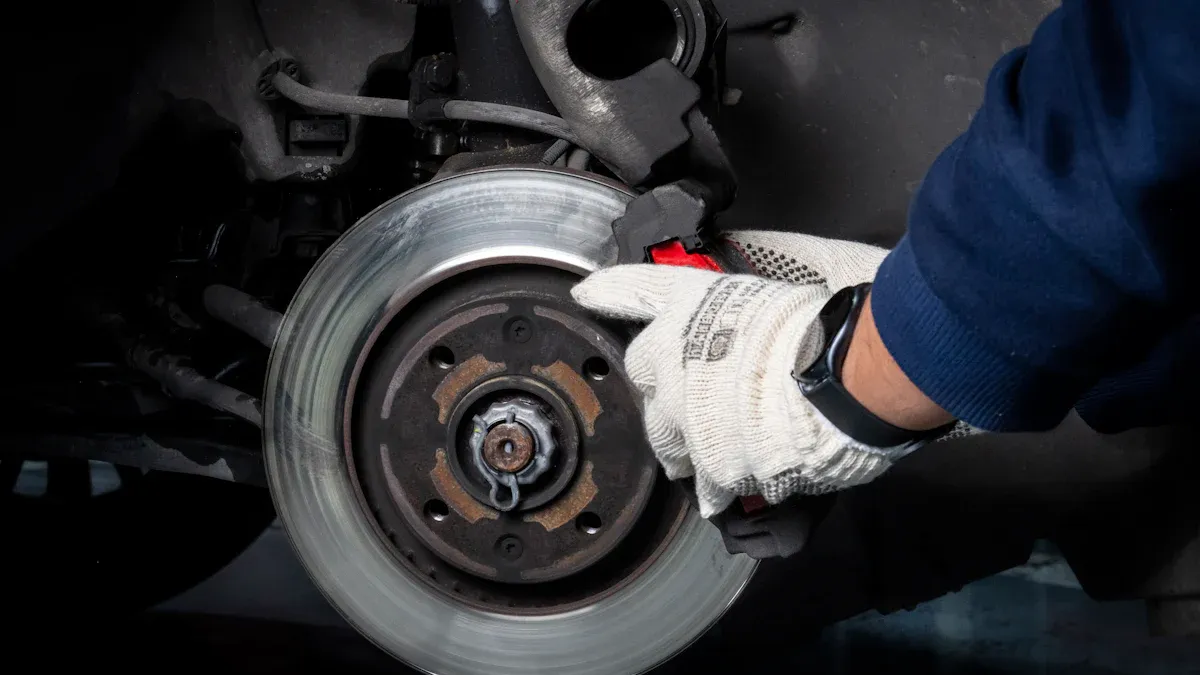
You can check for wheel bearing problems at home with a few simple steps. Start by parking your car on a flat surface and putting on safety gear like gloves and glasses. Use a jack and jack stands to lift the wheel. Grab the tire at the top and bottom, then rock it back and forth. If you feel looseness or hear a clunk, you might have a bad wheel bearing. Listen for changes in noise when you turn the steering wheel. These symptoms often show up in the early stages of wheel bearing failure. Here’s a quick list of tools you’ll need:
Wheel Bearing Tool Set
Jack and Jack Stands
Lug Wrench
Torque Wrench
Grease Gun
Hammer
Pry Bar
Safety Glasses
Work Gloves
If you notice any symptoms, ask yourself: how long do wheel bearings last? If your car has high mileage, it’s smart to check more often.
When to See a Mechanic
Sometimes, at-home checks aren’t enough. You should see a mechanic if you hear grinding, humming, or growling from the wheels. Vibrations, uneven tire wear, or steering pull are also signs. If the ABS warning light comes on or you notice wheel play, get professional help. Mechanics can spot the stages of wheel bearing failure and know what can damage a wheel bearing.
Risks of Ignoring
Ignoring a bad wheel bearing can lead to big problems fast. You could lose control of your car or even have a wheel separate. Other parts like the hub, spindle, and brakes can get damaged. Increased friction and heat may cause a wheel fire. Uneven tire wear can happen quickly, making your car unsafe. Wondering what can damage a wheel bearing? Driving with symptoms for too long is a major cause. Always ask yourself how long do wheel bearings last and check for symptoms often.
Spotting wheel bearing trouble early keeps you safe and saves money. Watch for these symptoms:
Growling or humming sounds
Vibrating steering wheel
Uneven tire wear
ABS warning light
Try these checks:
Notice if your car pulls or feels loose.
Look for steering wheel vibration.
Check for warning lights.
Prompt repairs boost stability and prevent costly damage.
FAQ
How can you tell if your wheel bearing needs replacing?
You might hear grinding or feel vibrations. If you notice these, check with a mechanic. They can confirm if your wheel bearing needs replacement.
Can you drive with a noisy wheel bearing?
Driving with a noisy wheel bearing is risky. You could lose control or damage other parts. Get it checked as soon as possible.
What happens if you ignore wheel bearing problems?

 English
 العربية
 Français
 Русский
 Español
 Português
 Deutsch
 italiano
 日本語
日本語 한국어
한국어 Nederlands
 Tiếng Việt
 ไทย
ไทย Polski
 Türkçe
 ພາສາລາວ
 ភាសាខ្មែរ
 Bahasa Melayu
 ဗမာစာ
ဗမာစာ தமிழ்
தமிழ் Filipino
 Bahasa Indonesia
 magyar
 Română
 Čeština
 Монгол
 қазақ
қазақ Српски
 हिन्दी
 فارسی
فارسی Kiswahili
 Slovenčina
 Slovenščina
 Norsk
Norsk Svenska
 українська
 Ελληνικά
 Suomi
Suomi Հայերեն
 עברית
עברית Latine
 Dansk
Dansk اردو
اردو Shqip
Shqip বাংলা
বাংলা Hrvatski
 Afrikaans
 Gaeilge
 Oʻzbekcha
 Български
 ქართული