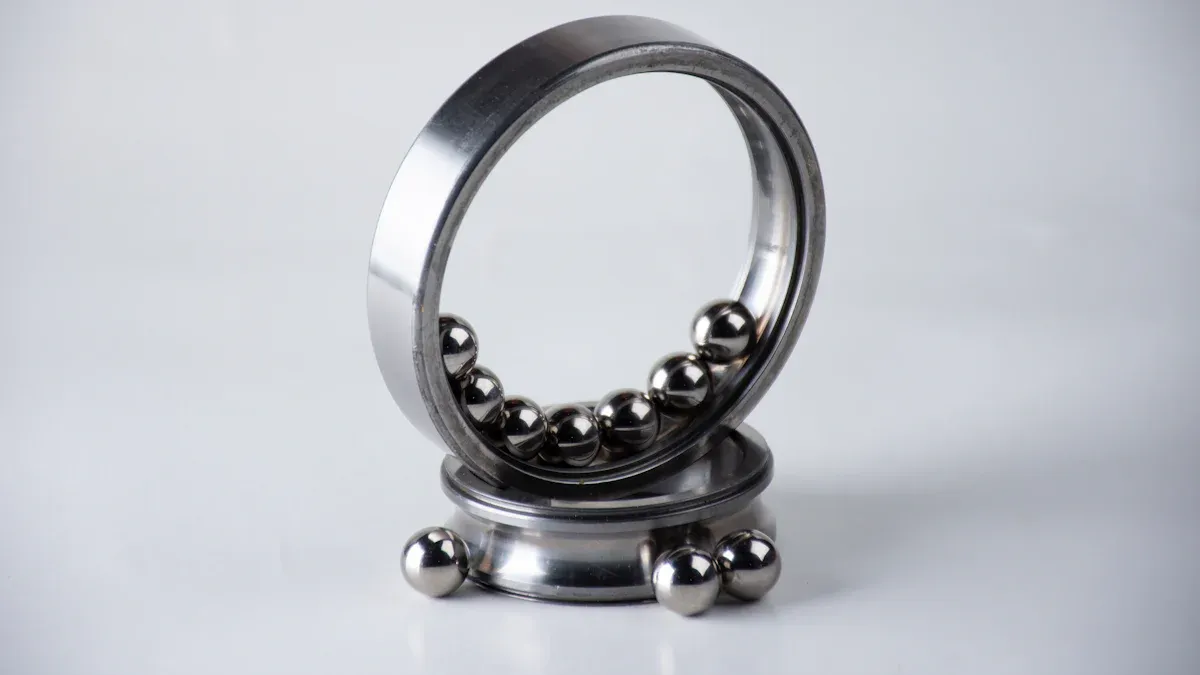
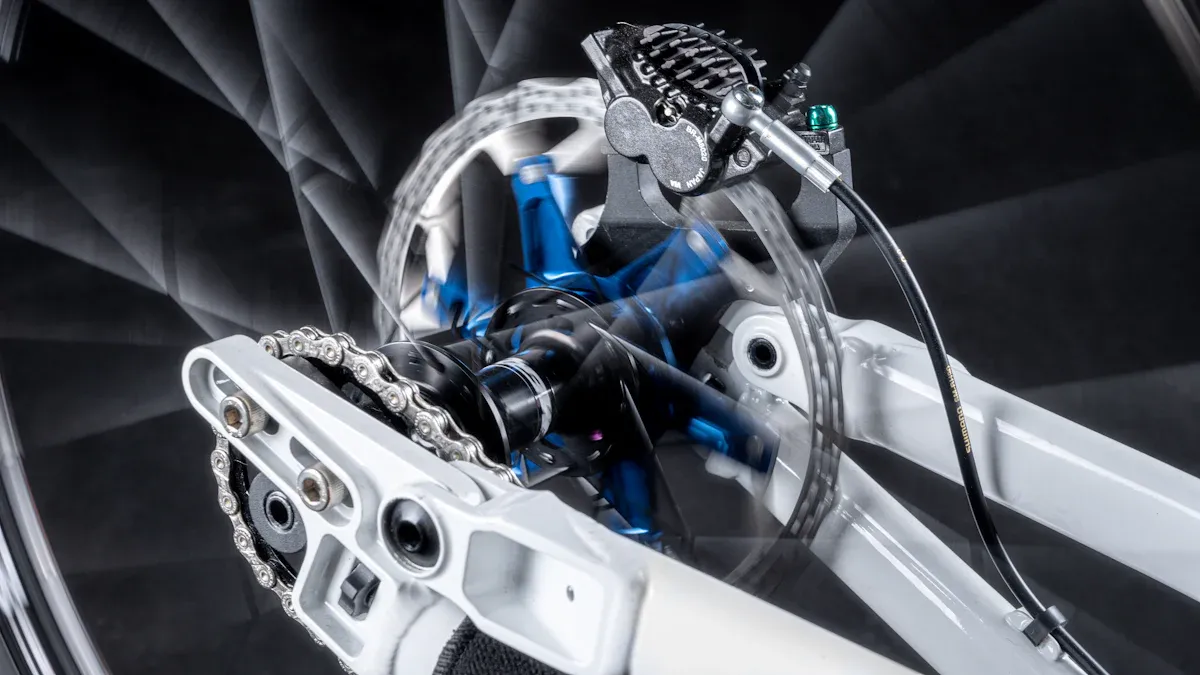
Ball bearing's potential means these small balls can change machines. They can also make electric effects. You can see their use in history. Romans used rollers to move big stone columns. Chinese inventors made round bronze things to test rolling. Da Vinci made ball bearings better during the Renaissance. This helped modern technology. Ball bearings help lower friction. They can carry heavy things. They can also make electric potential if charged.
Time Period | Civilization | Evidence of Ball Bearings Usage |
900 B.C. | Romans | Used rollers to move big stone columns in buildings. |
100 B.C. | Chinese | Made round bronze things to test rolling. |
Late 15th Century | Renaissance | Da Vinci made ball bearings better for new technology. |
Key Takeaways
Ball bearings lower friction. This helps machines work better and last longer. Parts do not wear out as fast.
Good load distribution and lubrication are very important. They help ball bearings work their best. This stops damage and makes them last longer.
Ball bearings can hold electric potential when they are charged. Smaller bearings with the same charge have higher electric potential. This is important for new technology.
Ball bearings help many industries like cars, planes, and medicine. They make things work better and safer. Picking the right bearings means better efficiency and fewer repairs.
Making ball bearings in a sustainable way uses less energy. It also lowers harm to the environment. This helps keep the planet clean.
Ball bearing's potential
Mechanical potential
Ball bearing's potential shows in how machines work better. Ball bearings lower friction. They help parts move with less effort. You can find them in cars, bikes, and skateboards. Using ball bearings helps machines last longer. Machines also work better with them.
Many things affect mechanical potential:
Load Distribution: Bearings must be put in the right way. This spreads the load out. If not, bearings wear out fast.
Operational Conditions: Bearings deal with fast speeds and hot or cold places. These things change how long bearings last.
Material Properties: Picking strong materials is important. Good materials help bearings handle stress and keep working.
Here are three key things to remember:
Friction: Try to keep friction low. Less friction means less heat and longer bearing life.
Load Distribution: Try to keep loads even. Uneven loads can hurt the bearing.
Lubrication: Use the right kind and amount of lubrication. Good lubrication cuts down on friction and wear.
Tip: If you take care of ball bearings, you boost their mechanical potential. This helps machines run well and saves money on repairs.
Electric potential
Ball bearing's potential also means electric effects. If you charge a ball bearing, it can hold electric potential. You use this formula for electric potential:
V = k * Q / r
Where:
V is electric potential (volts)
k is Coulomb's constant (about 9 × 10⁹ N·m²/C⊃2;)
Q is the charge (coulombs)
r is the radius (meters)
This formula tells you how much electric potential a ball bearing has. If you add more charge or make the ball bearing smaller, the electric potential goes up.
Let’s see two examples:
Ball Bearing Size | Charge (Q) | Radius (r) | Electric Potential (V) |
Small (0.01 m) | 1 μC | 0.01 m | 900,000 V |
Large (0.05 m) | 1 μC | 0.05 m | 180,000 V |
You can see that smaller ball bearings with the same charge have higher electric potential.
Electric potential is important in new technology. In electric vehicles, ball bearings can get electric currents. These currents can hurt the surface. You might see damage like electric erosion or discharge marks. Electric currents can cause wear and friction, especially if lubrication is not good. This matters when making bearings for electric and hybrid cars. High current can cause fluting and pitting, which hurts the bearing.
Comparing mechanical and electric potential
Ball bearing's potential has two parts. Mechanical potential helps machines move and last longer. Electric potential can cause problems if not controlled. You need to think about both when using ball bearings. Mechanical potential makes machines work better and last longer. Electric potential can bring new problems, especially in electric cars and advanced machines.
Note: Always think about both mechanical and electric potential. This helps you pick the right bearing and avoid trouble later.
Applications
Automotive
Ball bearings are in almost every car. They help wheels turn without problems. Engines run better because of them. Ball bearing's potential is seen in many car parts. Here is a table that shows where they are used and what they do:
Application | Benefit |
Wheel Bearings | Ensure smooth rotation and durability |
Electric Motors | Provide reliable performance under load |
Transmissions | Improve efficiency and reduce wear and tear |
Steering Systems | Enhance performance and safety |
Engine Parts | Contribute to overall vehicle efficiency |
Ball bearings also help keep people safe. New ways to find faults use smart technology. These methods spot problems early. They help stop accidents and keep cars working longer.
Researchers learned that new fault detection can be 100% correct.
This means cars are safer and break down less.
You also spend less money fixing your car.
Tip: Picking the right ball bearings makes your car safer and work better.
Aerospace
You find ball bearings in planes and rockets. They help parts spin fast and carry heavy loads. Ball bearings work well in hot or cold places. They last a long time if you use the right oil.
Ball bearings let engines and turbines spin with less friction.
They handle sideways and straight forces.
They keep working at high speeds and temperatures.
New technology makes ball bearings even better for planes. Ceramic hybrid bearings are lighter and resist heat. These bearings help planes use less fuel. Smart sensors now check bearing health. This helps fix problems before they cause delays.
Medical devices
Ball bearings help medical tools work well and safely. You see them in surgical robots, pumps, and ventilators. The table below shows how they help:
Key Applications | Performance Specs | User Benefits |
Surgical robots | ABEC 7–9; 1–10 mm bore; 200,000+ rpm | Lower maintenance, longer intervals |
Infusion/insulin pumps | >99.5% uptime targets | Improved energy efficiency |
Ventilators/CPAP | 1,000+ autoclave cycles | Better patient comfort |
Medical ball bearings meet strict safety rules.
Special oils help them last longer and work better.
Sealed designs keep out water and cleaning fluids.
Note: Ball bearing's potential in medical devices means safer care and less downtime for hospitals.
Renewable energy
You see ball bearings in wind turbines and solar trackers. They help blades and panels move easily, even in strong weather. Here is a table that shows different bearings and what they do:
Type of Bearing | Features | Advantages |
Ball bearings | Withstand high loads, resist vibration | Smooth rotation, better energy conversion |
Tapered roller bearings | High load capacity, durable | Support heavy loads in wind turbines |
Spherical roller | Self-aligning, high load capacity | Reliable in changing weather |
Slewing bearings | High precision, weather resistance | Accurate tracking, long service life |
Light ball bearings | Low friction, precise control | More efficient solar tracking |
Tip: Using the right ball bearings helps make clean energy better and cheaper.
Innovations
Materials
New materials are changing how ball bearings work. Ceramic materials help bearings last longer in tough places. AISI 440C steel does not rust easily, so you can use it in wet or harsh places. ZrO2, called zirconia, is a ceramic choice that works well when steel is not the best.
Advanced ceramics like silicon nitride stay hard and strong, even when hot.
These materials do not get bigger when heated, so they fit fast machines.
New polymers and composites lower friction and wear. You can use them in many industries.
Picking the right material means less friction and more wear resistance. Bearings for gearboxes use strong materials to handle heavy loads and last longer. If you mix advanced materials with smart designs, you get bearings that last longer and work better.
Smart bearings
Smart bearings use sensors to check temperature, vibration, load, and speed. You get updates about your machines as they work. This helps you fix problems before they get worse. Smart bearings let you use predictive maintenance, so you avoid surprise breakdowns.
Feature | Smart Bearings | Traditional Ball Bearings |
Sensors | Yes, for real-time monitoring | No |
Data Analytics | Yes, for performance optimization | No |
Predictive Maintenance | Yes, reduces downtime and prevents failures | No |
Performance Adjustment | Yes, adapts based on operating conditions | No |
You find smart bearings in cars, planes, wind turbines, and food factories. They help you spot overheating or vibration problems early. In factories, smart bearings help machines fix themselves. In railways, they warn you about axle boxes and brakes.
The use of IoT in bearings is growing fast. Experts say the market for IoT in manufacturing could reach $385 billion by 2028.
Sustainability
You can help the planet by picking sustainable ball bearings. Factories now use less energy and fewer raw materials. They make less waste and lower carbon emissions.
Sustainable Practice | Environmental Benefit |
Energy-efficient production methods | Reduces carbon emissions |
Use of sustainable materials | Meets regulatory norms and corporate sustainability goals |
Lifecycle assessments | Ensures compliance with environmental standards |
Innovation | Environmental Benefit |
Energy-efficient deep-groove ball bearings | Uses 30% to 50% less energy than regular bearings |
Optimized internal geometry | Improves low-friction performance, lowering energy use |
Extended running time after power shutdown | Shows efficiency in energy use |
You see new designs with better surfaces and built-in lubrication channels. These changes lower the carbon footprint. Lifecycle management, like recycling and predictive maintenance, makes bearings more sustainable than older ways.
Challenges
Technical limits
Ball bearings have some tough limits. The materials you pick can affect how well they work. Ceramics and composites can help, but they cost a lot. Making many of them is hard. You need very exact ways to make bearings fit in machines. This makes things more expensive.
Materials and making bearings with care are hard tasks.
Ceramics are good, but they cost more and are hard to make.
You need careful work to fit bearings in new machines, which costs more.
People want eco-friendly bearings, so you must find better materials.
You want bearings that last and carry more, but size is a problem.
Many jobs need special bearings, so you must keep making new ones.
Ball bearings in tough places have more problems. Too much heat can ruin oils, so you need better cooling and oils. Vibration and noise can break machines, so you need careful designs. Hard places wear out bearings, so you use special coatings. Dirt can get inside, so you use sealed bearings to keep them safe.
Opportunities
There are many new chances for ball bearings. Wind turbines and electric cars need better bearings for green energy. Planes, robots, and hospitals want light and strong bearings. New rules mean you must use safer and greener materials.
Wind and electric cars need new bearings.
Planes, robots, and hospitals need special bearings for hard jobs.
Makers must follow rules, so they use better materials.
New ideas help you fix old problems. Ceramics let bearings go faster and get hotter. They last longer and need less oil. Additive manufacturing lets you make cool shapes fast and cheap. Green ways use less energy and help the earth.
Technology/Material | Benefits |
Ceramics | Go faster, get hotter, last longer, need less oil |
Additive Manufacturing | Make cool shapes, test fast, save money and time |
Sustainable Practices | Help the earth, use less energy, work better |
People now reuse materials and save energy. Bearings need less oil, so they save power and help the planet. These new ways make bearings last longer and work better in more places.
You can see that ball bearings help machines in many ways. They have both mechanical and electric uses. These uses help people fix problems and think of new things.
The market for dual ball bearings is growing quickly. Smart factories and robots make them better and faster.
New types, like high-speed bearings, help electric cars drive longer and charge quicker.
Experts work on stronger materials, smart sensors, and designs that save energy.
Trend Description | Impact on Ball Bearings |
More electric vehicles | Need for special, efficient bearings |
Growth in renewable energy | Demand for new bearing designs |
Rise of automation and robotics | Precision and smart bearings needed |
By learning about ball bearings, you help shape the future. Your knowledge can make machines better and help the planet stay clean.
FAQ
What does "ball bearing's potential" mean?
Ball bearing's potential means how much work a ball bearing can do. You see mechanical potential in moving parts. Electric potential shows up when you charge the bearing. Both help machines work better.
How do you calculate electric potential for a ball bearing?
You use the formula V = k * Q / r.
Where do you find ball bearings in daily life?
You find ball bearings in bikes, cars, fans, and skateboards. They help wheels turn smoothly. You also see them in washing machines and medical devices.
Why do ball bearings need lubrication?
Lubrication helps ball bearings move with less friction. You use oil or grease to keep them cool and prevent wear. Good lubrication makes bearings last longer.
Can ball bearings help save energy?
Yes! Ball bearings lower friction in machines. You use less energy to move parts. This helps cars, wind turbines, and factories work more efficiently.

 English
 العربية
 Français
 Русский
 Español
 Português
 Deutsch
 italiano
 日本語
日本語 한국어
한국어 Nederlands
 Tiếng Việt
 ไทย
ไทย Polski
 Türkçe
 ພາສາລາວ
 ភាសាខ្មែរ
 Bahasa Melayu
 ဗမာစာ
ဗမာစာ தமிழ்
தமிழ் Filipino
 Bahasa Indonesia
 magyar
 Română
 Čeština
 Монгол
 қазақ
қазақ Српски
 हिन्दी
 فارسی
فارسی Kiswahili
 Slovenčina
 Slovenščina
 Norsk
Norsk Svenska
 українська
 Ελληνικά
 Suomi
Suomi Հայերեն
 עברית
עברית Latine
 Dansk
Dansk اردو
اردو Shqip
Shqip বাংলা
বাংলা Hrvatski
 Afrikaans
 Gaeilge
 Oʻzbekcha
 Български
 ქართული