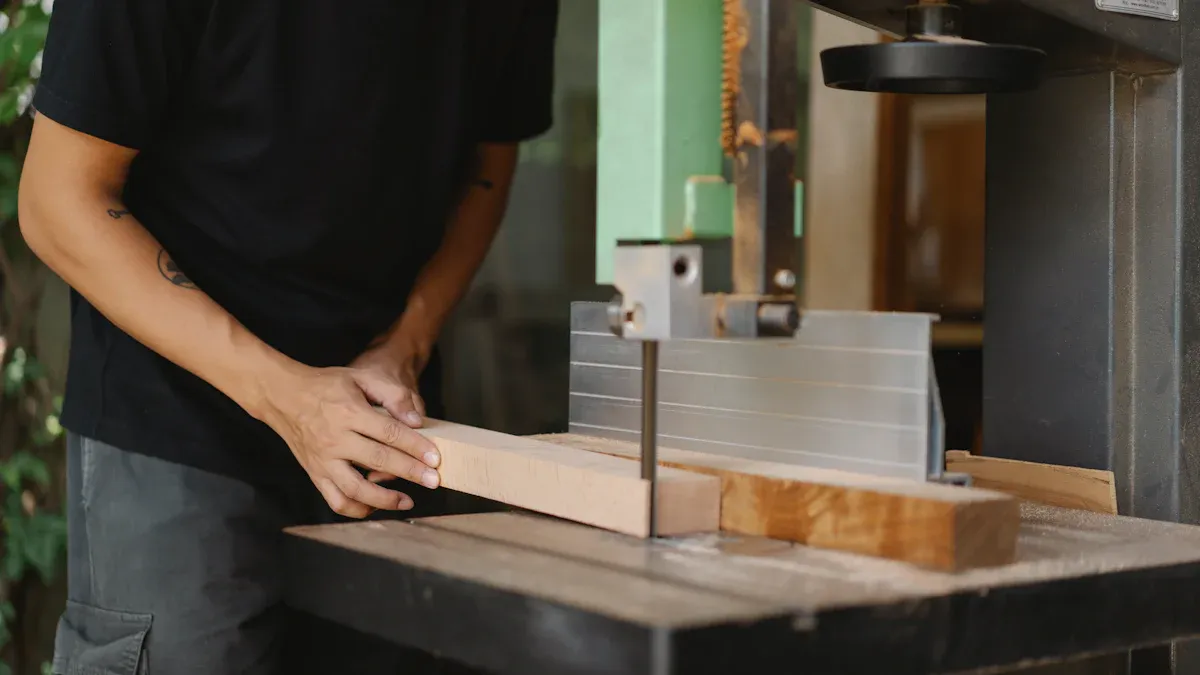
Imagine using a CNC machine or a medical device. Every movement must be smooth and exact. You use Linear Bearing technology for straight-line, easy motion. This helps your equipment work better, faster, and quieter.
Benefit | Description |
Precision and Accuracy | Linear bearings give very good precision and accuracy. This is needed for important jobs. |
Low Friction and Reduced Wear | They have very little friction. This saves energy and stops parts from wearing out fast. It helps them last longer. |
High Load-Carrying Capacity | They can hold heavy things. This keeps work going well without slowing down. |
Smooth and Quiet Operation | They help machines run quietly. This matters in places like hospitals. |
Customization and Adaptability | You can change them to fit special needs. This makes sure they work well for different jobs. |
Cost-Effectiveness and Longevity | They save money over time. They need less fixing and last longer than other types. |
Smooth sliding motion is important in many areas:
You get the best results when you learn how to pick, set up, and take care of linear bearings.
Key Takeaways
Linear bearings help machines move smoothly and accurately. This is very important for machines like CNC devices and medical tools.
Picking the right linear bearing for the job is important. You need to think about how much weight it will hold and what it will do. This helps the machine work well and last longer.
Taking care of linear bearings is important. You should clean and oil them often. This lowers friction and stops them from wearing out fast. It also helps them last longer.
Putting linear bearings in the right way is important. They need to be lined up correctly. This stops problems like noise and bumpy movement. It also helps the machine work better.
Knowing what causes friction and dirt helps a lot. It keeps the machine running smoothly. It also stops expensive repairs from happening.
Linear Bearing motion factors
Design features
You want your machine to move smoothly and last a long time. The design features of a Linear Bearing play a big role in how well it works. Most Linear Bearings have a sleeve-like outer ring. Inside, rows of balls sit in cages. This setup helps the bearing roll easily and keeps friction low.
Rolling-element bearings use balls or rollers to reduce friction. These parts move between the shaft and the outer ring.
High rigidity helps the bearing stay strong under heavy loads. You get better performance and less bending.
The geometry of the bearing and the way tracks are arranged affect how well it handles force. Good design means the bearing can carry more weight and move more smoothly.
Some bearings use special shapes, like Gothic arch profiles. These shapes help the bearing last longer and carry more load.
Material matters. Hard steel parts, with a hardness of Rc60, make the bearing tough and help it last longer.
You should also think about load capacity. Dynamic load capacity tells you how much weight the bearing can handle while moving. Static load capacity shows how much weight it can hold without getting damaged. If you use the right design, your Linear Bearing will work better and last longer.
Tip: Choose a bearing with high rigidity and the right geometry for your application. This helps you get smoother motion and longer life.
Friction sources
Friction can slow down your machine and cause wear. You need to know where friction comes from in a Linear Bearing system.
Seals can add friction. They protect the bearing from dirt but make it harder for parts to move.
Lubrication is important. Too much grease or oil, or using a thick lubricant, can increase friction. Not enough lubrication causes parts to rub and wear out.
Sliding contact parts, like lead screws and plain bearing guides, have more friction than rolling-element bearings. The larger contact area makes movement harder.
The shape of the raceway affects friction. If the contact area is big, friction goes up.
Preload makes the bearing stiffer. This helps with accuracy but also increases friction.
Contamination is another big problem. Dust, dirt, and water can get inside the bearing. These particles mess up the lubrication and make the bearing noisy. They also cause vibration and heat. If oil gets dirty, the bearing resists motion more. More particles mean more wear and higher temperatures. Sometimes, sludge and corrosion form, blocking oil flow and making friction worse.
Note: Keep your Linear Bearing clean and well-lubricated. This reduces friction and helps your machine run smoothly.
Linear Bearing selection
Types overview
There are many kinds of Linear Bearing. Each one is good for a different job. You should know how each type moves and feels.
Type of Bearing | Smoothness Characteristics | Load Capacity and Precision |
Linear Ball Bushings | Very smooth, low-friction motion; high accuracy on hardened shafts | Can carry substantial loads; micron-level positioning |
Linear Roller Bearings | Higher load capacity and stiffness; some designs offer very high precision and rigidity | Handles higher loads than ball types |
Sleeve (Plain) Bearings | Higher friction than rolling types; simple and rugged | Tolerant of contamination; lower load capacity |
Linear Guide Rails | Extremely smooth motion; high accuracy over long distances | Combines benefits of both ball and roller bearings |
Linear Ball Bushings help you move things very smoothly. They are best when you need exact control. Linear Roller Bearings are good for heavy things. They also make the machine stiffer. Sleeve Bearings are tough and work well in dirty places. They do not move as smoothly, but they last a long time. Linear Guide Rails help you move smoothly for long distances. They give you strong support and high accuracy.
Tip: Pick the type that fits your job. For smooth movement, use ball bushings or guide rails. For heavy loads, choose roller bearings.
Selection criteria
You need to think about many things before picking a Linear Bearing. Every project is different. Make sure your choice fits what you need.
Precision: Decide how exact your movement must be.
Orientation: See which way the bearing will move.
Speed: Know how fast your machine will go.
Travel: Measure how far the bearing will slide.
Load: Find out how much weight it must hold.
Unknowns: Think about things that might change.
Duty Cycle: Count how often and how long it will work.
Environment: Look at the temperature, humidity, and dirt.
Safety: Make sure your choice keeps people and machines safe.
If you need high-precision, look at every detail. You must balance things like preload, cleanliness, seals, and lubrication. Preload helps you get better accuracy, but it can make movement harder. Cleanliness helps the bearing work well. Seals keep dirt and water out. The right material helps the bearing last longer. Lubrication helps parts slide and stops wear.
Note: Always pick the bearing that matches your needs. For smoother sliding, keep it clean and use the right lubricant. Pick seals that protect but do not make too much friction.
Installation tips
Alignment
You want your linear bearing to move smoothly every time. Good alignment helps you avoid friction and wear. If you set up the bearing in the wrong way, you may see uneven movement or hear strange noises. Misalignment can cause the bearing to bind or wear out faster.
Self-aligning plain bearings help you fix small errors in alignment. These bearings can handle tilting and oscillating motion. You get less friction and better performance. Always check that the shaft and bearing are straight. Use a level or alignment tool to make sure everything lines up.
Tip: Keep the mounting surface clean and flat. Dirt or bumps can push the bearing out of place. You should follow the manufacturer's instructions for alignment. This helps you avoid problems later.
Mounting
Mounting your linear bearing the right way makes a big difference. You need to choose the correct bearing type and size for your project. Clean the mounting area before you start. Check the bearing and fittings for damage. Prepare your tools, such as heaters or press tools, if needed.
Here is a simple checklist for mounting:
Confirm the bearing type and size.
Clean the mounting location.
Inspect all parts for damage.
Select the right mounting method.
Prepare tools and equipment.
Precondition bearings with heating or cooling if needed.
Handle bearings gently to avoid shock.
Fix and adjust the bearing as required.
Inspect the assembly after mounting.
Record installation data for future maintenance.
Tighten bolts to the correct torque. Loose mounting can cause jerky motion and noise. Too much force can distort the bearing. The pillow block housing and clearance between the bearing and shaft affect stability. If you set the clearance too tight, friction goes up. If it is too loose, the bearing loses rigidity.
Note: Careful mounting helps your bearing last longer and move smoothly. You save money and avoid costly repairs.
Maintenance
Lubrication
You need the right lubricant to keep linear bearings smooth. Lubrication lowers friction and heat. It also stops rust and helps bearings last longer. Grease is best for slow jobs because it stays put and protects the bearing. Oil is better for fast jobs since it cools and moves easily. Most setups use lithium-based grease with a class between 00 and 3. Oil choice depends on how thick it is. Oil works well in horizontal systems with central lubrication.
You should check your bearings often. Look for rust, leaking grease, or worn spots. Move the bearing by hand to feel for roughness or odd shaking.
How often you add lubricant depends on how hard the machine works. Light jobs need it every few months or once a year. Medium jobs need it every few weeks or months. Heavy jobs need it every week or even every day. Always look for wear and use good lubricants.
Lubrication makes a thin layer between parts. This cuts down friction and wear.
Lubricants block water and dirt, so they stop rust.
Lubrication keeps heat down and protects the bearing.
Tip: Check lubricant levels often. Use the right kind to stop wear and overheating.
Cleaning
Cleaning your linear bearings keeps out dirt and damage. Dirt makes friction worse and wears out parts. Clean bearings move better and last longer. Use gentle cleaning and change the lubricant after cleaning.
Use seals or shields to block dust and water. Pick the right one for your area.
Clean and check bearings often. Take off dirt gently and do not use strong chemicals.
Keep the area near bearings clean and dry. Good lubrication also keeps out dirt.
Clean heavy-duty slide rails every week or month, based on your area.
Look at bearings and check for shaking to find problems early.
Cleaning gets rid of dirt that causes friction and wear. This helps bearings work better and last longer.
Teach your team to listen for strange sounds or movement. Give them pictures to help and set up a way to report problems fast.
Expert tips
Advanced tweaks
You can make your linear bearing system work better with some smart changes. First, pick the right bearing for your job. Low-friction linear bearings help machines move faster and stay cool. Precision linear bearings keep movement steady and correct, even if there are vibrations. Long-life linear bearings are strong and last a long time, even in hard jobs. Self-lubricating features save you time and keep your machine working longer.
Type of Advanced Bearing | Benefit |
Low-friction linear bearings | Lower heat and energy use; let machines run faster and smoother |
Precision linear bearings | Keep movement exact; stop mistakes from shaking |
Long-life linear bearings | Handle lots of use; make bearings last longer |
Self-lubricating features | Need less service; make machines more dependable |
You should put rails or shafts far enough apart to stop bumpy movement. Use the 5:1 rule for spacing between the center of gravity and the rail. This helps stop chattering and keeps things moving smoothly. If you use hand-powered tools, do not make the load too heavy. Hybrid bearings can help you move things with less effort.
Tip: Clean rails and blocks often. Check if everything is lined up. Use the right lubricant. Look for damage or wear to keep your system working well.
Troubleshooting
Sometimes, linear bearings have problems, but you can fix them with a few steps. Use vibration tools to find out if things are not lined up right. Watch the temperature for sudden changes that show lubrication problems. Look at the bearings to see if they are worn or broken. If you find a problem, figure out what caused it so you can fix it for good.
Use vibration tools to find misalignment.
Watch temperature for lubrication trouble.
Check bearings for damage or wear.
Find out why failures happen to fix them.
Common problems are misalignment, not enough lubrication, dirt, and wrong installation. Keep rails safe from dirt and water. Lubricate parts that do not have seals often. Make sure rails and moving parts are lined up. Follow the rules for installation to stop crashes or going too fast.
Note: Check how much weight your bearings can hold. Do not use too much or too little. Start machines slowly to avoid sudden hits and damage.
You can make sliding motion smoother by using some simple steps. First, use the right lubricant. This stops friction and helps bearings work well. Next, keep your workspace clean. Dirt can hurt moving parts. Pick guides that are very precise. Put them in place with care for better accuracy. Check the space between parts. Adjust liners to help things slide better.
Advantage | Description |
Smooth and accurate motion | Less vibration and noise means things work better. |
High load capacity | Can hold heavy things during hard work. |
Low friction and wear | Bearings last longer and need less fixing. |
Easy installation | Saves room and makes repairs easy. |
Try these ideas in your own work. Share what you learn or ask questions below. This helps everyone get better.
FAQ
How do you know which linear bearing to choose?
You should look at your project needs. Think about load, speed, and accuracy. Check the environment for dust or water. Pick a bearing that matches these needs. Ask for help if you are not sure.
Tip: Use ball bushings for smooth motion. Use roller bearings for heavy loads.
What is the best way to keep linear bearings clean?
You need to clean bearings often. Wipe away dust and dirt with a soft cloth. Use seals or shields to block more dirt. Change lubricant after cleaning.
Why does my linear bearing make noise or feel rough?
Noise or rough movement means something is wrong. You may have dirt, poor alignment, or not enough lubricant. Check for damage and clean the bearing. Add the right lubricant.
Note: Always check alignment and lubrication first.
How often should you lubricate linear bearings?
Lubricate bearings based on how much you use them. Light jobs need it every few months. Heavy jobs need it every week. Always check for wear and add lubricant when needed.
Usage Level | Lubrication Frequency |
Light | Every few months |
Medium | Every few weeks |
Heavy | Every week |

 English
 العربية
 Français
 Русский
 Español
 Português
 Deutsch
 italiano
 日本語
日本語 한국어
한국어 Nederlands
 Tiếng Việt
 ไทย
ไทย Polski
 Türkçe
 ພາສາລາວ
 ភាសាខ្មែរ
 Bahasa Melayu
 ဗမာစာ
ဗမာစာ தமிழ்
தமிழ் Filipino
 Bahasa Indonesia
 magyar
 Română
 Čeština
 Монгол
 қазақ
қазақ Српски
 हिन्दी
 فارسی
فارسی Kiswahili
 Slovenčina
 Slovenščina
 Norsk
Norsk Svenska
 українська
 Ελληνικά
 Suomi
Suomi Հայերեն
 עברית
עברית Latine
 Dansk
Dansk اردو
اردو Shqip
Shqip বাংলা
বাংলা Hrvatski
 Afrikaans
 Gaeilge
 Oʻzbekcha
 Български
 ქართული