What happens when a small bearing is slightly wrong for its machine? Heat, noise, vibration, and unexpected downtime can quickly follow.
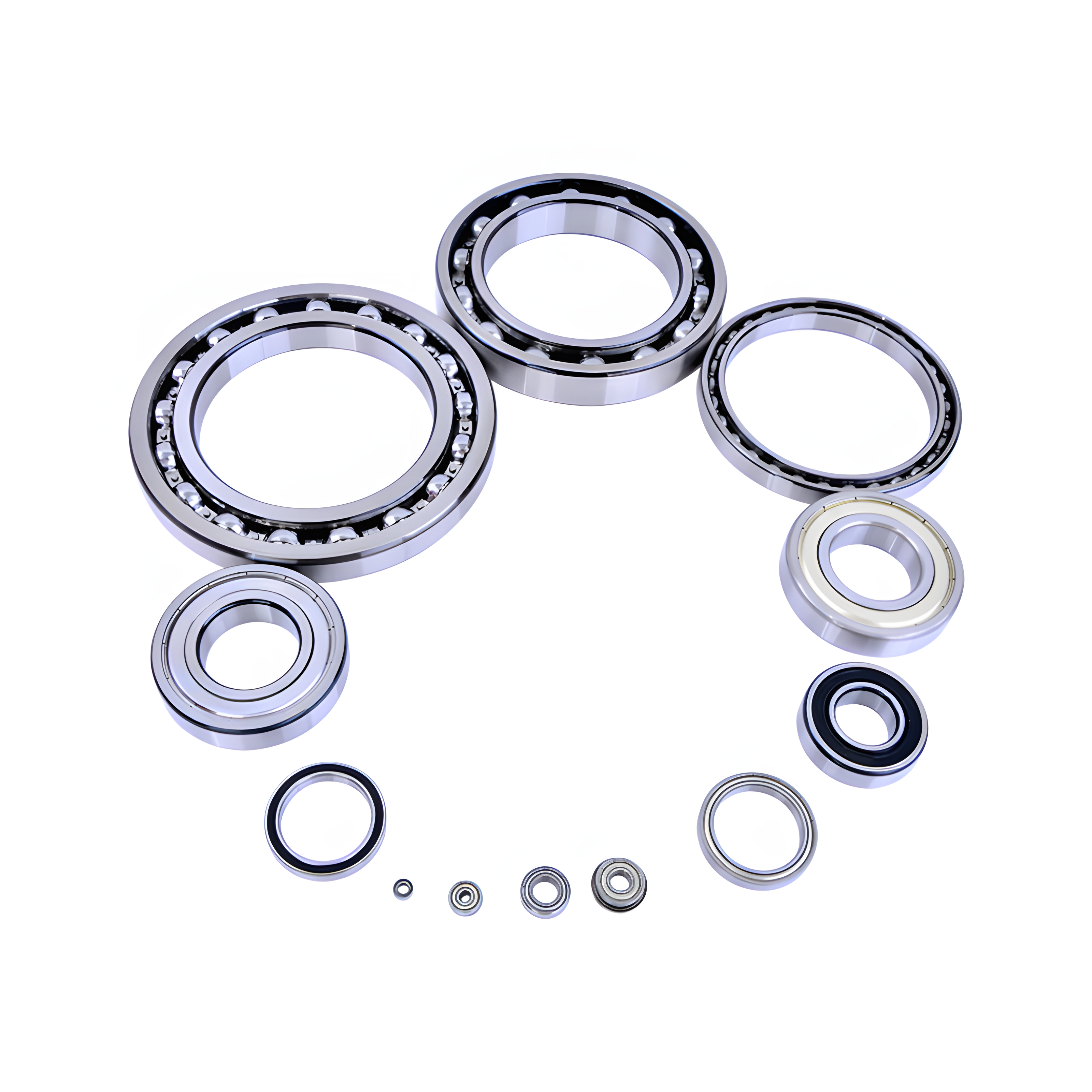
Deep groove ball bearings support motors, pumps, fans, gearboxes, and industrial equipment. However, similar model numbers can have very different dimensions and performance limits.
In this guide, we compare ten common deep groove ball bearings. You will learn their sizes, applications, design differences, and key selection factors.
Table of Contents
Toggle
Quick Comparison of 10 Common Deep Groove Ball Bearings
The table lists standard boundary dimensions. Load ratings and speed limits can vary. They depend on the manufacturer, seal, cage, clearance, and lubricant.
Bearing Model
Bore d (mm)
Outside Diameter D (mm)
Width B (mm)
Common Uses
6000
10
26
8
Small motors, instruments, compact drives
6001
12
28
8
Fans, power tools, small pumps
6200
10
30
9
Motors, conveyors, general machinery
6201
12
32
10
Pumps, fans, electric equipment
6202
15
35
11
Motors, power tools, agricultural equipment
6203
17
40
12
Pumps, gearboxes, auxiliary drives
6204
20
47
14
Motors, conveyors, industrial equipment
6205
25
52
15
Pumps, gearboxes, agricultural machinery
6206
30
62
16
Larger motors, transmission equipment
6305
25
62
17
Higher radial loads and heavier machinery
Dimensions should be checked against the final supplier datasheet. Load and speed data require model-specific verification.
What Makes Deep Groove Ball Bearings So Useful?
Deep groove ball bearings use deep raceways in both rings. The raceways closely follow the shape of each ball. This design creates a large contact area during operation.
They primarily carry radial loads. They can also support moderate axial loads in both directions. This feature makes them useful in compact machine assemblies.
Their non-separable design also simplifies installation. The inner ring, outer ring, balls, and cage form one unit. Many models support high rotational speeds when properly selected.
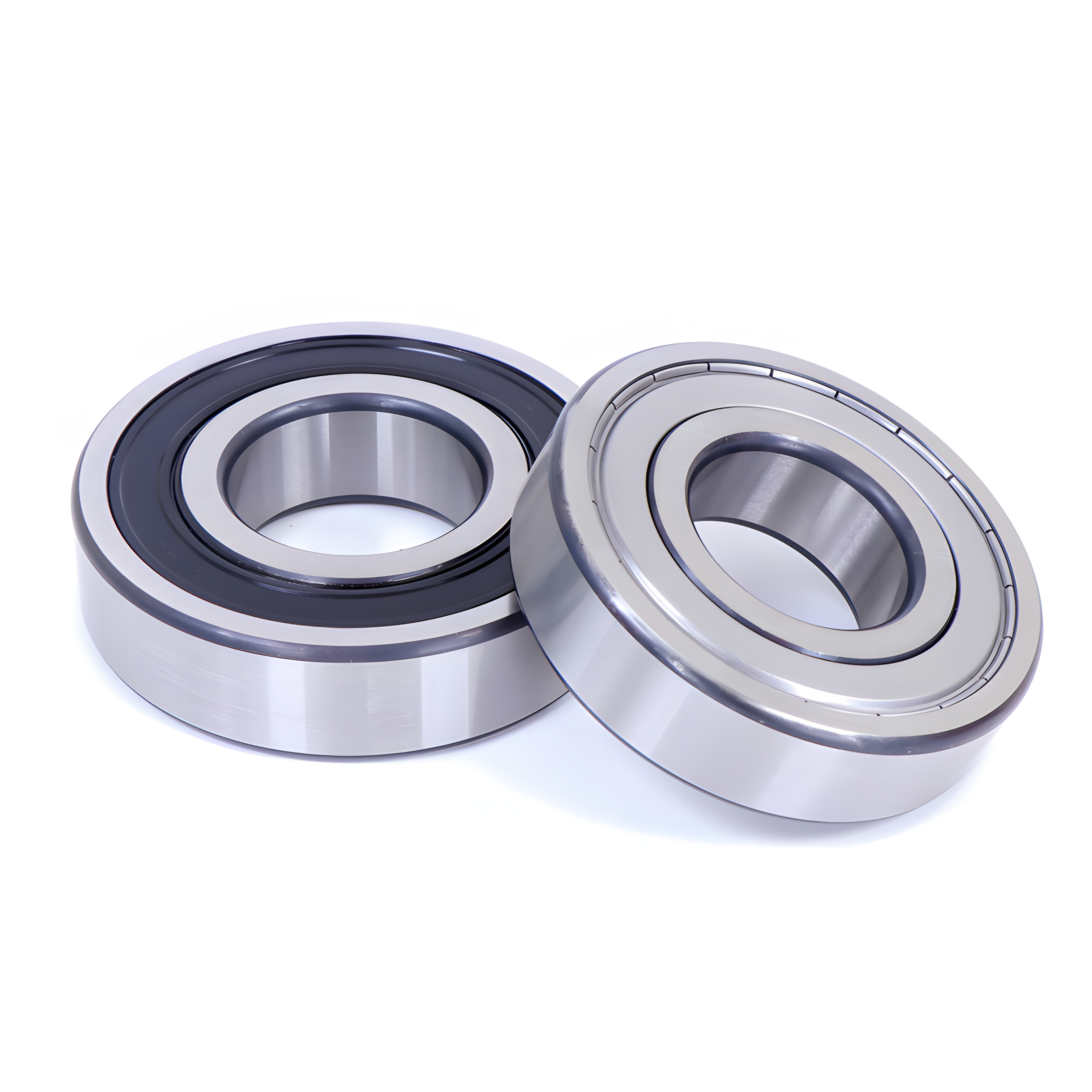
You can choose open, shielded, or sealed versions. Each design provides a different balance of speed and protection.
6000 Deep Groove Ball Bearing
The 6000 bearing has a 10 mm bore. Its outside diameter measures 26 mm. Its width is 8 mm.
This compact model suits equipment where space remains limited. It is often considered for small motors, instruments, light-duty drives, and compact rotating assemblies.
The 6000 has a smaller outside diameter than the 6200. Both models use a 10 mm bore. However, they should not be treated as direct replacements.
Choose the 6000 when compact dimensions matter most. Confirm the load requirement before making the final selection.
6001 Deep Groove Ball Bearing
The 6001 bearing uses a 12 mm bore. It has a 28 mm outside diameter and an 8 mm width.
It fits small fans, pumps, power tools, and electric equipment. Its narrow width supports compact machine designs. It can also reduce the required housing space.
Buyers should still check speed and contamination levels. An open version can support low-friction rotation. A sealed version provides more environmental protection.
6200 Deep Groove Ball Bearing
The 6200 bearing has a 10 mm bore. It measures 30 mm outside and 9 mm wide.
It provides a broader cross-section than the 6000. This difference can support different load requirements. It also requires a larger housing.
Common uses include electric motors, small conveyors, fans, and general industrial equipment. Open, ZZ, and 2RS options may be available.
Do not select it by bore diameter alone. Confirm the housing diameter, available width, load, and speed.
6201 Deep Groove Ball Bearing
The 6201 bearing uses a 12 mm bore. Its outside diameter is 32 mm. Its width is 10 mm.
This size is common in small motors, circulation pumps, fans, and electrical equipment. It offers more radial section than the 6001.
Choose the seal based on the operating environment. ZZ shields suit relatively clean conditions. The 2RS design offers stronger protection from dust and moisture.
6202 Deep Groove Ball Bearing
The 6202 bearing has a 15 mm bore. It measures 35 mm outside and 11 mm wide.
It is used in motors, power tools, agricultural assemblies, and compact drives. It works well where moderate capacity and compact size are both important.
Operating temperature can affect internal clearance. Tight fits can also reduce it. Buyers should confirm whether normal clearance or C3 clearance is required.
6203 Deep Groove Ball Bearing
The 6203 bearing has a 17 mm bore. Its outside diameter is 40 mm. Its width is 12 mm.
This model appears in pumps, gearboxes, motors, and auxiliary drive systems. It supports many general industrial applications.
Noise-sensitive equipment may require tighter vibration control. Higher speed applications may require a verified precision grade. The grease must also suit the operating temperature.
6204 Deep Groove Ball Bearing
The 6204 bearing has a 20 mm bore. It measures 47 mm outside and 14 mm wide.
It suits motors, conveyors, pumps, gearboxes, and automated equipment. Its size makes it a practical choice for many medium-duty assemblies.
Before ordering, check the full suffix. A 6204, 6204-ZZ, and 6204-2RS share basic dimensions. Their protection, friction, grease, and speed limits may differ.
6205 Deep Groove Ball Bearing
The 6205 bearing uses a 25 mm bore. It has a 52 mm outside diameter and a 15 mm width.
It is often selected for pumps, motors, gearboxes, agricultural machinery, and industrial drives. Its dimensions provide a balanced option for many 25 mm shafts.
However, it is not the only bearing using a 25 mm bore. The 6005, 6305, and 6405 have different outside dimensions. They also provide different capacity levels.
This comparison shows why shaft size alone is not enough.
6206 Deep Groove Ball Bearing
The 6206 bearing has a 30 mm bore. It measures 62 mm outside and 16 mm wide.
It suits larger electric motors, pumps, reducers, and transmission equipment. Its increased dimensions support more demanding applications than smaller 6200 models.
Installation practice becomes more important as load increases. Use correct mounting tools. Avoid striking the bearing rings or transmitting force through the balls.
6305 Deep Groove Ball Bearing
The 6305 bearing also uses a 25 mm bore. However, it has a 62 mm outside diameter and a 17 mm width.
It offers a larger cross-section than the 6205. This design generally supports greater radial capacity. It also needs more housing space.
The 6305 can suit heavier machinery, larger drives, and equipment facing higher radial loads. It should not replace a 6205 without reviewing the housing design.
6205 vs 6305: Why Similar Bore Sizes Can Mislead
Both bearings fit a nominal 25 mm shaft. Their remaining dimensions differ.
Selection Point
6205
6305
Bore Diameter
25 mm
25 mm
Outside Diameter
52 mm
62 mm
Width
15 mm
17 mm
General Positioning
Balanced size and capacity
Larger section for higher radial demand
Housing Requirement
More compact
Larger housing needed
The 6305 may offer more radial capacity. Yet it also adds size and mass. Always compare confirmed load and speed ratings before changing models.
Open, ZZ, or 2RS: Which Design Should You Buy?
The basic bearing number identifies its dimensions. The suffix often describes its protection design.
Design
Protection Level
Friction
Best Fit
Open
Low
Low
Clean housings and external lubrication
ZZ
Medium
Low
Motors, fans, and general machinery
2RS
Higher
Moderate
Dusty or moisture-prone equipment
Open bearings expose the balls and raceways. They suit clean systems using controlled lubrication.
ZZ bearings use metal shields on both sides. They block larger particles while maintaining relatively low resistance.
The 2RS design uses rubber seals on both sides. It offers stronger protection against contamination. Its limiting speed may be lower than an open version.
Suffix systems can vary by manufacturer. Confirm the exact designation before ordering.
How to Select the Right Deep Groove Ball Bearing
Confirm the Dimensions
Start with bore, outside diameter, and width. Check both shaft and housing dimensions. Never rely on bore size alone.
Review Radial and Axial Loads
Deep groove bearings mainly carry radial loads. They can accept moderate axial loads. High axial loads may require another bearing design.
Check Continuous and Maximum Speed
Speed affects heat, grease life, and cage behavior. Use the supplier’s verified speed limits. Do not copy data across brands.
Choose the Correct Seal
Select the seal based on dust, moisture, and maintenance access. Stronger sealing often creates more friction.
Select Internal Clearance
Fits and temperature can reduce installed clearance. C3 clearance may help in certain motors or warmer conditions. It is not a universal upgrade.
Confirm Precision and Noise Requirements
General machinery may use standard precision. High-speed motors may need tighter accuracy. Low-noise applications also need verified vibration grades.
Match the Lubricant to the Application
Grease must suit speed, load, and temperature. Too little grease can cause damage. Too much grease can increase heat.
Common Purchasing Mistakes
Many bearing failures begin before installation. Avoid these common mistakes:
Ordering by bore diameter only
Ignoring the complete model suffix
Choosing C3 without checking the fit
Treating ZZ and 2RS as identical
Using unverified speed ratings
Ignoring the operating temperature
Replacing a bearing without checking housing dimensions
Selecting the lowest price without quality records
A clear inquiry reduces these risks. It also helps suppliers provide faster technical confirmation.
Information to Send Your Bearing Supplier
Provide the complete bearing number when available. Include every suffix and clearance mark.
If the number is unknown, send these details:
Shaft diameter
Housing bore
Available bearing width
Radial and axial loads
Continuous and maximum speed
Operating temperature
Dust or moisture exposure
Required seal type
Precision or noise requirement
Required quantity
A drawing or clear bearing photo may also help. It should show markings and key dimensions.
Frequently Asked Questions
Which deep groove ball bearing is most common?
There is no universal best model. The 6200 range appears in many machines. The correct model still depends on size, load, speed, and environment.
Can a 6205 replace a 6305?
No direct replacement should be assumed. They share a 25 mm bore but have different outside diameters and widths.
Is a 2RS bearing better than a ZZ bearing?
It depends on the application. The 2RS design offers stronger protection. ZZ can provide lower friction at higher speeds.
Do deep groove ball bearings carry axial loads?
Yes, they can carry moderate axial loads in both directions. The allowed load depends on design, clearance, speed, and operating conditions.
When should C3 clearance be used?
C3 may suit tighter fits or higher operating temperatures. The final selection should follow an engineering review.
What causes early bearing failure?
Common causes include contamination, poor lubrication, overload, misalignment, incorrect clearance, and mounting damage.
Choose the Bearing by Application, Not Popularity
These ten models provide a useful starting point. They cover many common shaft sizes and equipment types. Still, popularity does not guarantee compatibility.
Start with the required dimensions. Then review load, speed, seal, clearance, and precision. This process reduces replacement risk and improves operating reliability.

 English
 العربية
 Français
 Русский
 Español
 Português
 Deutsch
 italiano
 日本語
日本語 한국어
한국어 Nederlands
 Tiếng Việt
 ไทย
ไทย Polski
 Türkçe
 ພາສາລາວ
 ភាសាខ្មែរ
 Bahasa Melayu
 ဗမာစာ
ဗမာစာ தமிழ்
தமிழ் Filipino
 Bahasa Indonesia
 magyar
 Română
 Čeština
 Монгол
 қазақ
қазақ Српски
 हिन्दी
 فارسی
فارسی Kiswahili
 Slovenčina
 Slovenščina
 Norsk
Norsk Svenska
 українська
 Ελληνικά
 Suomi
Suomi Հայերեն
 עברית
עברית Latine
 Dansk
Dansk اردو
اردو Shqip
Shqip বাংলা
বাংলা Hrvatski
 Afrikaans
 Gaeilge
 Oʻzbekcha
 Български
 ქართული